Mathematics is a key life skill which lies at the core of scientific understanding and of rational and logical argument, providing the solution to some of the world’s most intriguing problems. A high-quality Mathematics education will provide a foundation for understanding the world, the ability to reason Mathematically, an appreciation of the beauty and power of Mathematics, and a sense of enjoyment and curiosity about the subject. Throughout their school experience, pupils will be given opportunities which will enable them to have confidence in the Mathematical possibilities which will equip them with the knowledge and understanding necessary for further study, adult life and employment.
We will always have STEM with us. Some things will drop out of the public eye and go away, but there will always be science, engineering, and technology. And there will always, always be mathematics.
— Katherine Johnson, African-American mathematician
Intent
THE AIMS OF THE 2014 NATIONAL CURRICULUM ARE FOR PUPILS TO:
- become fluent in the fundamentals of mathematics through varied and frequent practice with complexity increasing over time
- develop conceptual understanding and ability to recall and apply knowledge rapidly and accurately reason mathematically; follow a line of enquiry, conjecture relationships and generalisations
- develop an argument, justification and proof by using mathematical language
- problem solve by applying knowledge to a variety of routine and non-routine problems. breaking down problem solving by applying knowledge to a variety of routine and non-routine problems. breaking down problems into simpler steps and persevering to find solutions
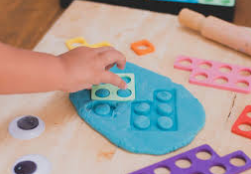
The EYFS Statutory Framework 2014 sets standards for the learning, development and care of children from birth to five years old and supports an integrated approach to early learning. This is supported by the ‘Development Matters’ non-statutory guidance. The EYFS Framework in relation to Mathematics aims for pupils to:
- develop and improve their skills in counting
- understand and use numbers
- calculate simple addition and subtraction problems
- describe shapes, spaces, and measures
Implementation
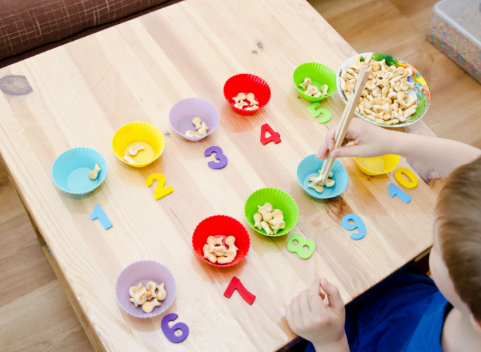
In Stoke Bishop we aim to achieve these aims by providing opportunities for our children to:
- become confident at calculating and knowing when to apply different methods
- gain positive attitudes towards the subject and awareness of the relevance of Mathematics in the real world
- use and apply mathematical knowledge, concepts and skills with competence and confidence
- solve problems, to reason, to think logically and to work systematically and accurately
- work both independently and in cooperation with others to develop initiative and motivation
- become confident in communicating in Maths where pupils ask and answer questions, openly share work and learn from mistakes
- use and apply Mathematics across the curriculum and in real life
- gain an understanding of Mathematics through a process of enquiry and investigation
We aim to provide a stimulating and exciting learning environment that takes account of different learning styles and uses appropriate resources to maximise teaching & learning.
Mastering Number
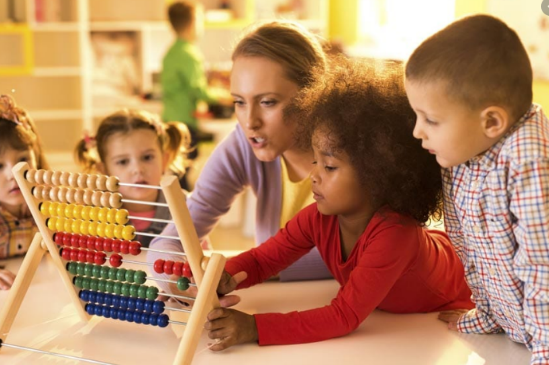
All children from Reception to Year 3 take part in Mastering Number sessions. This project from NCETM aims to secure firm foundations in the development of good number sense for all children from Reception through to Year 3. The long term aim over time is that children will leave KS1 with fluency in calculation and a confidence and flexibility with number.
Times Tables
All children from Year 3 up will begin to learn their times tables ready for the Times Table Check at the end of Year 4. By the end of Year 4 all children are expected to be fluent in their times tables up to 12 x 12. You can support your child at home to learn their times tables using Times Tables Rockstars.

Impact
Our pupils are confident, able, lifelong Mathematicians who have a passion for Mathematics. They understand the importance of Mathematics and how to apply it in the real world. They are numerate, confident and ready for the challenges ahead. Pupils are confident at expressing their Mathematical understanding through talk – discussing, reasoning, explaining and predicting. The importance of Mathematics is understood by all members of staff and as such is interwoven throughout the school and curriculum.
ASSESSMENT (See Mathematics Policy)
Mathematics Assessment is an integral part of teaching and learning and is a continuous process. Teachers make informal assessments of children daily/weekly and formally three times a year through:
- regular marking of work
- analysing errors and picking up on misconceptions
- asking questions and listening to answers
- facilitating and listening to discussions
- making observations
- testing
- EYFS – Year 1
- Teacher assesment and 1:1 observations
- Years 2-5
- NTS Assessments in Term 2 and Term 5.
- Year 6
- NTS Assessments in Term 2
- Key Stage 2 SATs in Term 5
- EYFS – Year 1
Through our creative approach to teaching and learning we also seek to explore the possibilities and utilise further opportunities to use and apply Mathematics across all subject areas.
Useful Websites
Here ares some websites which may help.
- https://ttrockstars.com/ Times table practice
- https://play.numbots.com/#/intro Number bond practice
- https://whiterosemaths.com/homelearning/ Parent page for home learning
- https://www.bbc.co.uk/bitesize/subjects/zjxhfg8 KS1
- https://www.bbc.co.uk/bitesize/subjects/z826n39 KS2
- https://nrich.maths.org/primary You can narrow your search by clicking on “topics”
- https://www.themathsfactor.com/ Carol Vorderman delivers maths lessons for KS1 and KS2
- https://www.themathsfactor.com/ Practice mental maths facility, focussing on add, subtract, multiplication and divide
- https://teachmeuk.co.uk/step-by-step/ A parent-friendly outline of the Maths National Curriculum for each year group, provides information of the skills your child should be learning including examples of the hundreds of TeachMe Maths videos available
Our Policies
Calculation Policies
The below policies outline the calculation methods children are taught for each operation, in each year group.
Addition
Subtraction
Multiplication
Division